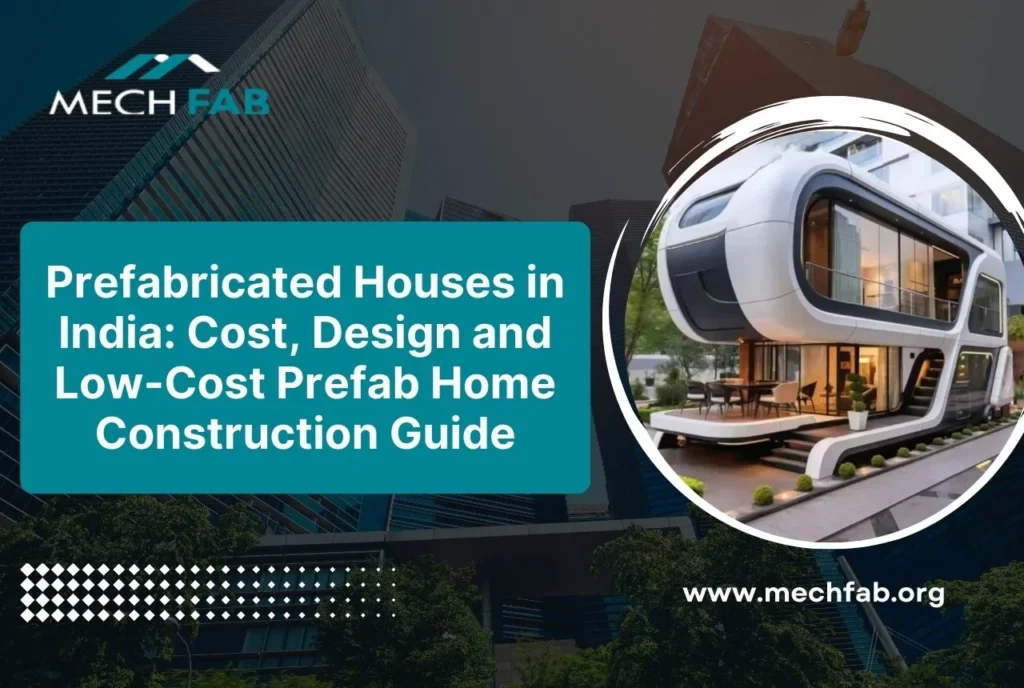
Explore prefabricated houses in India, understand prefabricated home cost in India, discover low cost prefabricated houses in India and learn how smart prefabricated home construction and prefabricated home design can give you a faster, durable dream home.
The housing landscape is changing rapidly, and prefabricated solutions are at the center of this transformation. As urban areas get denser and land prices climb, more homebuyers, developers, and even institutions are turning to prefabricated houses in India as a practical, modern, and efficient alternative to conventional construction. From faster delivery timelines to long-term cost savings and sustainability benefits, prefab homes are steadily moving from niche to mainstream.
This blog explores how the technology works, what affects prefabricated home cost in India, why low cost prefabricated houses in India are in such high demand, and how prefabricated home construction and prefabricated home design are reshaping the way we think about building and owning a house.
What Are Prefabricated Houses?
Prefabricated houses are homes constructed from components that are manufactured in a factory and then transported to the site for assembly. Instead of building everything brick-by-brick on-site, walls, floors, roofs, and structural frames are produced in a controlled factory environment.
Common prefab systems used in India include:
- Steel or light-gauge steel frame structures
- Precast concrete panels and blocks
- Modular container-based units
- Hybrid systems using steel frames with insulated wall panels
Once manufactured, these elements are transported to the plot and assembled like a carefully engineered kit. This approach dramatically reduces on-site labor, material wastage, and construction time.
Why Prefabricated Houses in India Are Gaining Popularity
The rising interest in prefabricated houses in India is not a temporary trend but a response to several structural challenges in the real estate and construction sector.
Key drivers include:
- High labor costs and shortage of skilled on-site workers
- Rising material prices and frequent cost overruns in conventional projects
- Demand for faster project completion from both developers and homeowners
- Increased awareness of green building practices and energy efficiency
- Government incentives and policy support for affordable housing and industrialized construction
For homeowners, the biggest attraction is the promise of a faster, cleaner, and more predictable way to build a home without compromising on quality or aesthetics.
Understanding Prefabricated Home Cost in India
One of the most frequently asked questions is about prefabricated home costs in India. While exact numbers vary depending on location, specifications, and size, prefab homes typically offer a more controlled and transparent cost structure than traditional methods.
Major factors that influence cost include:
- Size and configuration of the home (number of floors, rooms, and modules)
- Choice of structural system (steel frame, precast concrete, containers, or hybrid)
- Level of interior finishes (basic, mid-range, or premium)
- Roofing type and insulation requirements
- Location, site accessibility, and logistics for transportation and installation
Because most of the work happens in a factory setting, cost overruns due to delays, material theft, and labor inefficiencies are significantly reduced. For many projects, this leads to savings compared to conventional brick-and-mortar construction, especially when long-term durability and lower maintenance are considered.
Low Cost Prefabricated Houses in India: Making Housing Affordable
The need for low cost prefabricated houses in India is especially strong in urban peripheries, tier-2 and tier-3 cities, and rural development projects. Prefab technology is increasingly used for:
- Affordable housing schemes and mass housing colonies
- Staff quarters for schools, hospitals, and industries
- Site offices and worker housing for infrastructure projects
- Compact farmhouses and weekend homes
By optimizing designs and standardizing components, manufacturers can offer budget-friendly homes without compromising structural integrity. Smart choices—such as using efficient wall panels, simple roof profiles, and modular room layouts—help reduce costs while maintaining comfort and safety.
For example, a compact two-bedroom unit built using a standard modular grid can be designed so that wall panels and roof sections repeat in a uniform pattern. This repetition lowers manufacturing complexity and results in more economical solutions for families seeking low cost prefabricated houses in India.
The Process of Prefabricated Home Construction
Prefabricated home construction follows a clearly defined and highly coordinated sequence. This industrialized approach is one of the main reasons for faster completion and predictable timelines.
Typical stages include:
- Concept and planning
The homeowner or developer works with the design team to finalize requirements, such as number of rooms, floor area, functional needs, and budget. - Prefabricated home design and engineering
Architects and engineers create detailed prefab-friendly drawings. Structural calculations, load analysis, and service layouts (electrical, plumbing, HVAC) are done at this stage, ensuring that every component fits together with precision. - Factory manufacturing
Wall panels, columns, beams, floors, and roof members are manufactured in a controlled environment. Materials are cut, welded, cast, or assembled according to strict quality standards. - Site preparation
While components are being produced, the site team prepares foundations, utilities, and basic infrastructure. This parallel activity is a major time saver. - Transportation and on-site assembly
Completed components are transported to the site and assembled using cranes and specialized tools. Connections are bolted or welded as per design. In many cases, the main structure can be erected in a matter of days. - Interior finishes and services
Once the structural shell is ready, teams install flooring, wall finishes, false ceilings, doors, windows, and fixtures. Electrical and plumbing systems are connected and tested.
Because prefabricated home construction uses pre-engineered parts, the on-site phase is shorter and cleaner, with fewer disruptions to neighbors and lower environmental impact.
Prefabricated Home Design: Balancing Function, Aesthetics, and Efficiency
Modern prefabricated home design goes far beyond simple boxy structures. Architects now use advanced software and modular planning strategies to create homes that are:
- Architecturally appealing, with varied facades and roof forms
- Highly functional, with efficient circulation and smart storage
- Flexible, allowing future expansion or reconfiguration
- Energy-efficient, with orientation-based planning, shading, and insulation
Designers treat each module as a building block. These modules can be combined in different ways to create customized layouts: L-shaped homes, courtyard houses, double-height living rooms, or compact vertical units on small plots.
In many projects, prefabricated home design also integrates:
- Large windows and ventilated facades to improve daylight and airflow
- Solar panels on roofs for renewable energy generation
- Rainwater harvesting systems and efficient plumbing fixtures
- Thermal insulation in walls and roofs to reduce cooling loads
The result is a home that not only looks good but also performs well in India’s diverse climate zones, from humid coastal belts to hot plains and cooler hill regions.
Benefits of Choosing Prefabricated Houses in India
Homeowners and developers who choose prefabricated houses in India often highlight several clear advantages over traditional construction.
Key benefits include:
- Speed: Faster project completion, often reducing total build time by 30–60%.
- Cost control: Better predictability with fewer unexpected expenses.
- Quality: Factory-level precision, consistent finishes, and rigorous testing.
- Sustainability: Reduced material wastage, lower site pollution, and options for energy-efficient materials.
- Flexibility: Ability to expand, relocate certain modules, or reconfigure interiors more easily than conventional buildings.
For developers, the ability to deliver projects quickly and efficiently can significantly improve cash flows and project viability. For individual homeowners, the experience feels more like ordering a high-value product than managing a chaotic construction site for months.
Challenges and Misconceptions About Prefab Homes
Despite the advantages, some misconceptions still surround prefabricated home construction in India.
Common concerns include:
- Doubts about durability and structural strength
- Misunderstanding that all prefab homes look identical or “temporary”
- Worries about resale value and financing options
- Assumptions that design choices are extremely limited
In reality, properly designed and engineered prefab homes can meet or exceed standard building codes. Many structures are designed for long lifespans, just like traditional reinforced concrete buildings. As awareness grows, more banks and financial institutions are also opening up to financing such properties, especially when documentation is clear and approvals are in place.
How to Get Started with a Prefabricated Home
If you are considering building a prefabricated house, a structured approach will help you get the best outcome.
Steps to begin:
- Define your needs: Plot size, family size, room requirements, and budget range.
- Research suppliers: Look for experienced prefab manufacturers with completed projects and reliable client feedback.
- Request a proposal: Ask for concept layouts, estimated prefabricated home cost in India specific to your project, and a clear timeline.
- Check compliance: Ensure the design complies with local building codes, zoning regulations, and approval processes.
- Finalize design: Work closely with the design team to align prefabricated home design with your lifestyle and aesthetic preferences.
- Sign a clear contract: Include scope, materials, deliverables, warranty terms, and payment milestones.
With the right partner, the journey from idea to finished home becomes smoother, more transparent, and far less stressful than a conventional build.
The Road Ahead for Prefab in India
The future of prefabricated houses in India looks promising. As technology matures and economies of scale improve, more players are entering the market, driving innovation and competitive pricing. Government programs that focus on Housing for All, disaster-resilient structures, and sustainable development also create fertile ground for prefab solutions.
For homeowners, this shift means greater choice: the ability to select from a range of low cost prefabricated houses in India, mid-range family homes, or premium custom-designed prefab villas. For the construction industry, it marks a move towards more disciplined, tech-driven, and sustainable practices.
As awareness grows and successful case studies become more visible, prefabricated home construction and prefabricated home design are set to become integral parts of India’s mainstream housing ecosystem, offering a compelling blend of speed, quality, and value for the next generation of homes.