
The construction landscape in India is undergoing a quiet revolution — and pre-engineered steel buildings are at the center of it. From massive industrial warehouses in Pune to agricultural storage facilities in Assam, PEB structures are reshaping how India builds.
But what exactly is a pre-engineered steel building? Why are developers, industrialists, and project managers increasingly choosing PEB over brick-and-mortar? And what does it actually cost to build one in India?
In this comprehensive guide, we break down everything you need to know — including the technology behind PEB, its real-world advantages, typical cost ranges, and the sectors where it performs best.
What Is a Pre-Engineered Steel Building (PEB)?
A pre-engineered steel building is a complete structural system designed, fabricated, and supplied from a factory — and then bolted together on-site. Unlike conventional construction where raw materials arrive at a site and are assembled from scratch, a PEB arrives as a kit of precision-engineered parts ready for rapid erection.
The core material is high-tensile structural steel. Every beam, column, purlin, and panel is computer-designed using advanced structural software and manufactured under strict quality controls. The result is a building system that is consistent, strong, and engineered to exact site specifications.
PEB is not a new concept globally, but its adoption in India has accelerated significantly over the last decade — driven by faster project timelines, rising labor costs, and the infrastructure boom across manufacturing, logistics, and agri-storage sectors.
Key Components of a Pre-Engineered Steel Building
Understanding a PEB begins with knowing what goes into one. Here are the primary structural elements:
Primary Steel Framework — This is the backbone of the structure. Rigid frames composed of tapered columns and rafters carry the building’s load. These frames are optimized computationally so that steel is distributed only where the stress demands it, reducing material waste without compromising strength.
Secondary Structural Members — Purlins (horizontal roof members), girts (horizontal wall members), and eave struts connect the primary frames and support the cladding. These are typically cold-formed from steel coils, requiring no site welding.
Roofing and Wall Cladding — Galvanized or Galvalume-coated steel sheets form the building envelope. Options include single-skin sheeting, insulated sandwich panels, and standing-seam profiles for high-performance applications.
Doors, Windows & Accessories — Skylights, ridge ventilators, personnel doors, and louvers are all factory-produced and engineered to integrate seamlessly with the structure.
Foundation System — While the superstructure is prefabricated, PEB still requires a conventional reinforced concrete foundation designed to the building’s specific loads.
How PEB Structures Are Built: The 4-Stage Process
The efficiency of pre-engineered steel buildings comes from a streamlined, four-stage delivery model:
1. Engineering & Design — A structural design team uses specialized software (such as STAAD.Pro or dedicated PEB design platforms) to model the building. The software accounts for dead loads, live loads, wind loads, seismic zones, and snow loads. Every component is sized and specified digitally before a single piece of steel is cut.
2. Factory Fabrication — Once the design is approved, fabrication begins in a controlled manufacturing facility. Steel is cut, drilled, welded, and shot-blasted with precision CNC machinery. Components are painted or primed and tagged for easy identification during assembly.
3. Logistics & Delivery — Finished components are packed and transported to the construction site. Delivery is carefully sequenced so erection can proceed without material pile-up or delays.
4. Site Erection — A trained erection crew assembles the building using bolted connections. No welding is required on site in most cases. A standard industrial PEB can be erected in 4 to 8 weeks — significantly faster than the 6 to 12 months a comparable conventional structure would take.
Advantages of PEB: Why Businesses Are Making the Switch
1. Dramatically Faster Construction
Speed is the most frequently cited reason developers choose pre-engineered steel buildings. Because all components are fabricated simultaneously while site work (foundation, earthwork) progresses, the overall project timeline compresses dramatically.
For a business setting up a new manufacturing plant or warehouse, this means earlier occupancy, faster revenue generation, and reduced interest cost on capital employed during construction. In a competitive market, time-to-market can be a decisive advantage.
2. Lower Overall Project Cost
PEB structures typically deliver 20–35% cost savings compared to conventional RCC construction of equivalent size and functionality. These savings come from multiple sources:
- Material efficiency — Steel is used only where structurally necessary, reducing tonnage
- Reduced labor costs — Factory fabrication replaces large, unskilled site labor
- Shorter construction schedule — Fewer months on site means lower site management and overhead costs
- Minimal formwork and scaffolding — No concrete pours, no shuttering
This cost advantage is particularly significant on large-span, high-bay industrial buildings where conventional construction becomes prohibitively expensive.
3. Longer Clear Spans Without Interior Columns
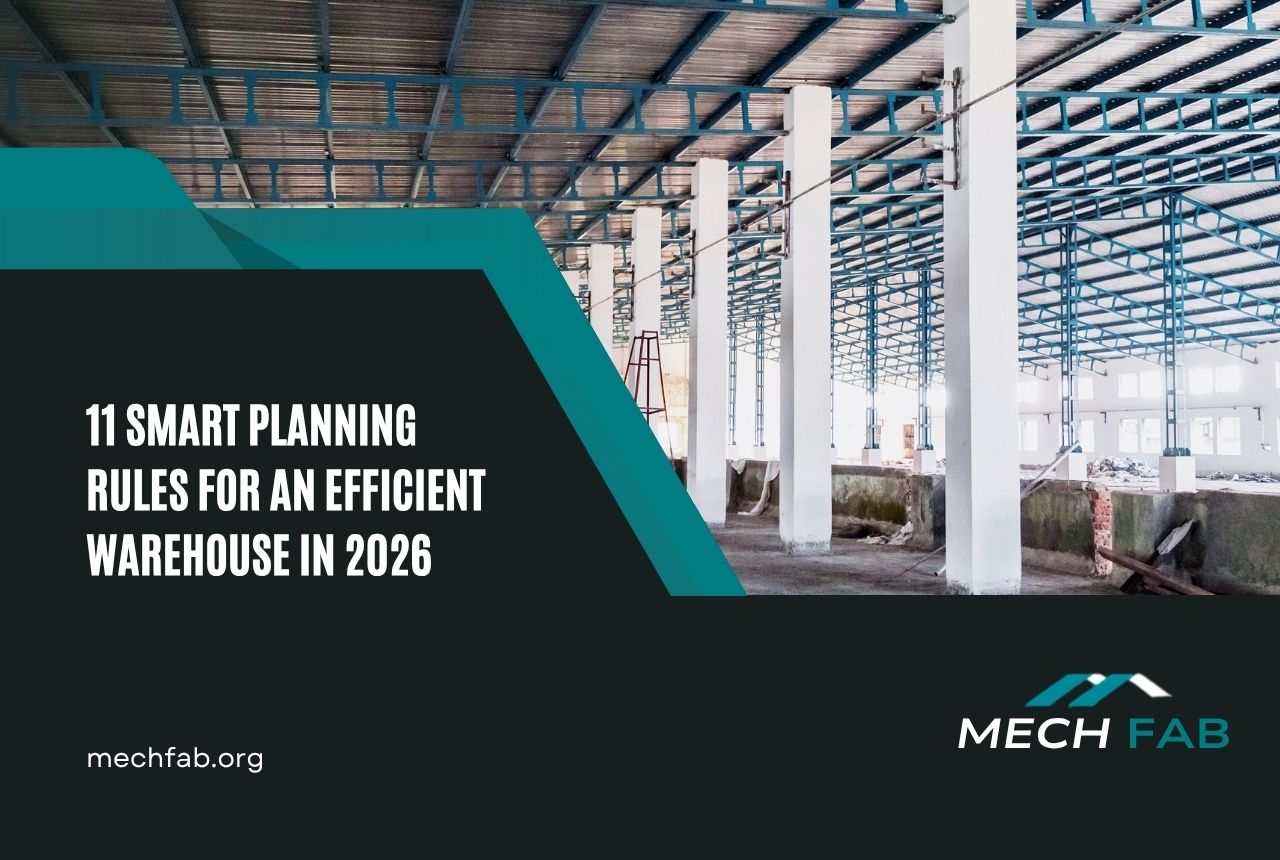
One of the most valued technical advantages of PEB is the ability to achieve large column-free interior spaces. PEB frames can routinely span 30 to 90 meters without intermediate columns. This is transformative for applications like aircraft hangars, sports facilities, logistics warehouses, and manufacturing plants where unobstructed floor space directly impacts operational efficiency.
Conventional RCC structures achieve such spans only at very high cost and complexity.
4. Design Flexibility and Customization
Despite being “pre-engineered,” these buildings are not cookie-cutter. Every PEB is custom-designed to the client’s plot dimensions, height requirements, usage, and aesthetic preferences. Buildings can be designed with mezzanine floors, crane girder systems, lean-to extensions, canopies, and complex architectural facades.
Modifications and expansions are also far simpler with PEB. Adding a bay to an existing PEB building typically requires a few additional frames and panels — not months of civil work.
5. Structural Resilience and Durability
High-tensile steel, when properly designed and protected, is among the most durable structural materials available. PEB structures are engineered to meet IS 800 (Indian Standard for Steel Structures) and can be designed to resist wind speeds, seismic activity, and heavy snow loads specific to their geographic location.
The coatings applied to cladding — Galvalume, prepainted PPGI, or factory-applied primers — provide effective long-term corrosion protection when maintained periodically.
6. Sustainability and Lower Environmental Impact
Compared to concrete construction, PEB has a significantly lower carbon footprint. Steel is 100% recyclable — at the end of a building’s life, structural steel retains significant scrap value and can be fully recycled without quality degradation.
PEB construction also generates far less site waste than conventional methods. Additionally, insulated roof and wall panels significantly improve the building’s thermal performance, reducing energy consumption for cooling or heating — a growing priority for Indian industries under ESG commitments.
7. Predictable Quality
When a building is fabricated in a factory under controlled conditions with calibrated machinery, the quality of each component is consistent and traceable. This is in sharp contrast to site-built structures where quality can vary based on labor skill, weather, supervision, and material supply chains.
For industries where building integrity is critical — cold chain logistics, pharmaceutical manufacturing, food processing — the quality predictability of PEB is a compelling reason to choose it.
Cost of PEB Structure in India: What to Budget in 2026
One of the most common questions buyers ask is: what does a PEB structure cost in India? The honest answer is that PEB pricing depends on several variables — but the following ranges provide a useful planning framework:
| Building Type | Approx. Cost (INR per sq. ft.) |
| Basic industrial shed (single skin) | ₹350 – ₹550 |
| Insulated warehouse or factory | ₹550 – ₹850 |
| Commercial / institutional PEB | ₹750 – ₹1,200 |
| Aircraft hangar / specialized | ₹1,200 – ₹2,000+ |
Note: These are indicative superstructure costs only and exclude civil foundation, utilities, and finishing works.
Key Factors That Influence PEB Cost in India
Steel tonnage and span — Larger spans require heavier primary frames, increasing steel tonnage and cost. Long-span buildings (>40m) will cost proportionally more per square foot than narrower structures.
Height — Taller buildings require heavier columns and more cladding area, both of which increase cost.
Load requirements — Buildings requiring overhead crane systems, heavy roof loads (for solar panels), or high wind/seismic design will require heavier steel.
Insulation specification — Insulated sandwich panels significantly outperform single-skin with glass wool in both thermal and acoustic performance — but carry a higher material cost.
Steel market prices — PEB cost in India fluctuates with the domestic hot-rolled coil (HRC) and structural steel market. It is advisable to lock in pricing with your supplier at the time of order.
Location and logistics — Remote sites in Northeast India, hilly terrain, or areas with poor road access may incur higher transportation and erection costs.
Getting at least two or three detailed quotations from reputable PEB manufacturers — with clear specifications — is the best way to arrive at a realistic project budget.
Where Are Pre-Engineered Steel Buildings Used?
PEB technology is remarkably versatile. Here are the sectors where it sees the highest adoption in India:
Industrial Manufacturing — Assembly plants, auto component factories, heavy engineering shops, and fabrication yards. PEB’s large spans and crane-compatible frames make it ideal.
Warehousing and Logistics — With the e-commerce and 3PL boom, demand for PEB warehouses has surged. PEB delivers fast occupancy and optimized clear height for racking systems.
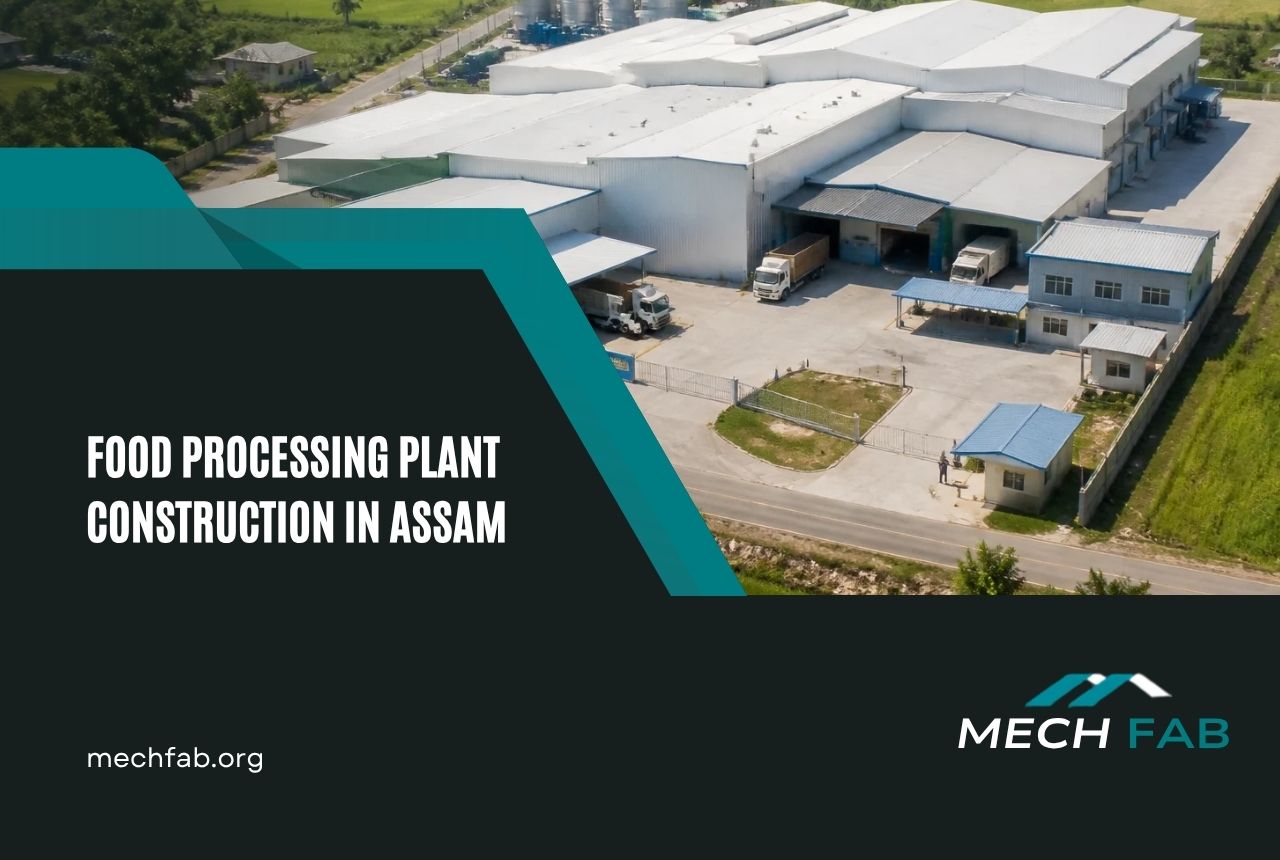
Agriculture and Agri-Processing — Grain storage, poultry farms, greenhouses, and food processing facilities benefit from PEB’s ventilation options and large floor areas.
Institutional and Commercial — Schools, sports halls, exhibition centers, aircraft maintenance facilities, and retail showrooms increasingly use PEB for speed and cost efficiency.
Infrastructure — Railway maintenance depots, metro car sheds, bus terminals, and military facilities are large-scale PEB users.
Mechfab: Delivering PEB Solutions Built for India
At Mechfab, we bring engineering precision and construction expertise together to deliver pre-engineered steel buildings that perform — on time, on budget, and to specification. Whether you are planning a greenfield industrial facility, a large-scale warehouse, or a specialized structure, our team can guide you from concept to commissioning.
We work across industries and geographies, with a particular understanding of the climatic and seismic conditions across Northeast India and beyond.
Ready to explore PEB for your next project? Visit mechfab.org to get in touch.
Frequently Asked Questions (FAQ)
Q: What is the lifespan of a pre-engineered steel building?
A properly designed and maintained PEB structure has a design life of 30 to 50 years or more. The structural steel itself can last much longer; periodic repainting and cladding replacement are the primary maintenance requirements.
Q: Can PEB structures be expanded later?
Yes. One of the significant advantages of PEB is its ease of expansion. Bays can be added longitudinally, mezzanines can be inserted, and lean-to structures can be attached with relatively minor structural intervention.
Q: Is PEB suitable for multi-storey construction?
PEB is primarily a single-storey technology, though mezzanine systems can add intermediate floors. For multi-storey buildings, conventional steel or RCC framing is more appropriate.
Q: How long does it take to build a PEB structure?
Design and fabrication typically take 8 to 14 weeks. Site erection for a mid-sized industrial building (3,000-5,000 sq.m.) generally takes 4 to 8 weeks, making total delivery 3 to 6 months from order to handover.
Q: Are PEB structures approved under Indian building codes?
Yes. PEB structures in India are designed in accordance with IS 800 (Steel Structures), IS 1893 (Seismic Design), and IS 875 (Wind and Live Loads). Reputable manufacturers provide structural drawings and calculations suitable for statutory approvals.