Imagine cutting a 170-kilometre road detour down to a single river crossing. That is exactly what the Dhola Sadiya Bridge achieved for millions of people in Assam and Arunachal Pradesh.
Before this bridge opened, goods vehicles, military convoys, and ordinary commuters had to take a gruelling multi-hour loop around the Lohit River. For local businesses in Guwahati and across Northeast India, that delay translated directly into higher logistics costs, slower supply chains, and missed market opportunities.
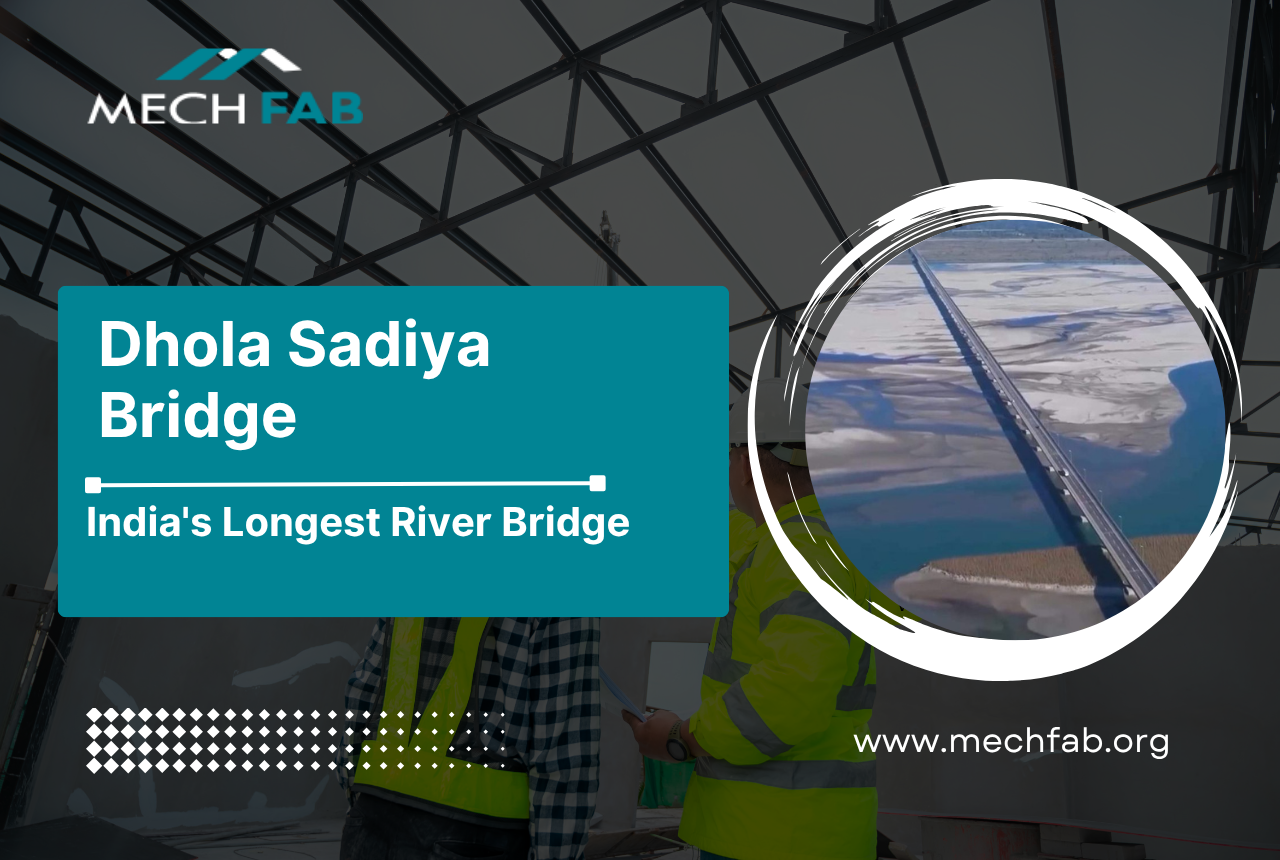
Today, the Dhola Sadiya Bridge — formally known as the Bhupen Hazarika Setu — stands as India’s longest river bridge at 9.15 kilometres. It is a masterpiece of modern engineering and a game-changer for the Northeast Indian economy.
In this comprehensive guide, we break down everything you need to know: the length of the Dhola Sadiya Bridge, the remarkable steel structure used in its construction, its strategic importance, and what it means for businesses operating in the region.
What Is the Dhola Sadiya Bridge?
The Dhola Sadiya Bridge is a road bridge spanning the Lohit River — a major tributary of the Brahmaputra — connecting the town of Dhola in Assam with Sadiya in Arunachal Pradesh. It was inaugurated by Prime Minister Narendra Modi on 26 May 2017. Renamed in honour of legendary Assamese musician and cultural icon Dr. Bhupen Hazarika, the bridge is more than a piece of infrastructure. It is a symbol of regional integration, connecting India’s remote northeastern territories to the national mainstream
Length of Dhola Sadiya Bridge: Understanding the Scale
The length of the Dhola Sadiya Bridge is 9.15 kilometres (9,150 metres), making it the longest bridge over a river in India at the time of its inauguration — surpassing the earlier record-holder, the Bandra-Worli Sea Link in Maharashtra.
To put that scale into perspective:
- It is longer than 100 standard football fields placed end to end.
- A person walking at a brisk pace would take over 90 minutes to cross it on foot.
- It has 182 individual spans, each engineered to withstand the powerful seasonal floods of the Brahmaputra basin.
The bridge’s width is 12.9 metres, accommodating a two-lane road. While the current configuration serves civilian and military traffic effectively, engineering provisions exist for future expansion.
Why the Length Matters for Business Logistics
For local businesses and freight operators in Guwahati and surrounding Assam districts, the bridge’s length is not just a statistical achievement — it is an economic enabler. Before the bridge:
- Trucks carrying goods to Arunachal Pradesh had to travel an additional 170 km around the Lohit River.
- In the monsoon season, when ferry services were disrupted, the detour became even longer and riskier.
- Perishable goods suffered significant losses due to extended transit times.
Today, a vehicle can cross the Lohit in under 30 minutes. This single change has reduced logistics costs for hundreds of businesses operating trade routes between Assam and Arunachal Pradesh.
Steel Structure Used in the Dhola Sadiya Bridge
The steel structure used in the Dhola Sadiya Bridge is one of its most technically impressive aspects. The bridge combines prestressed concrete (PSC) with high-tensile structural steel to achieve the load-bearing capacity required for heavy military and commercial traffic.
Steel Composition and Specification
The bridge used approximately 27,000 metric tonnes (MT) of structural steel across its construction. Here is a breakdown of how steel was used:
- High-Tensile Structural Steel (IS 2062 Grade): Used in the main bridge girders and cross beams, providing tensile strength to handle dynamic loads from heavy vehicles.
- Steel Prestressing Strands: Employed in the deck slabs to distribute load efficiently across 182 spans.
- Bearing Steel Plates and Anchor Bolts: Used at each pier to allow controlled movement of the bridge deck during seismic activity and thermal expansion.
- Reinforcement Steel (TMT Bars): Used extensively in the pier foundations and abutments, many of which extend deep into the riverbed.
Why a Steel-Dominant Structure?
Engineers chose a steel-heavy design for several critical reasons specific to this geography:
- Seismic Zone V: The entire region falls in India’s highest seismic risk zone. Steel’s ductility allows the structure to flex during earthquakes without catastrophic failure.
- Extreme Flood Conditions: The Lohit River experiences some of the most powerful flood surges in Asia during monsoons. Steel girders are lighter than full concrete alternatives, reducing the load on piers.
- Military Load Requirements: The bridge is designed to carry 60-tonne battle tanks and heavy military vehicles — a requirement that demanded high-grade structural steel with certified tensile and yield strength.
- Rapid Construction Needs: Prefabricated steel components allowed sections to be assembled off-site and installed faster, crucial in a remote, difficult-access location.
Why the Dhola Sadiya Bridge Matters for Northeast India
1. Defence and National Security
Perhaps the most immediate strategic significance of the Dhola Sadiya Bridge is military. Arunachal Pradesh shares a disputed border with China. Previously, moving military hardware, armoured vehicles, and troops to the border region required time-consuming ferry crossings or long mountain detours.
The bridge’s certified 60-tonne load capacity means that India’s heaviest main battle tanks — including the T-90 Bhishma — can be transported directly to forward positions. This represents a significant improvement in India’s strategic response capability in the Northeast.
2. Economic Connectivity for Local Business
For businesses based in Guwahati and across Assam, the bridge has opened direct, year-round road access to Arunachal Pradesh — a state with abundant natural resources, growing tourism, and significant government infrastructure spending.
- Contractors and fabricators: Steel fabrication and construction firms in Assam can now supply materials to Arunachal Pradesh projects without enormous logistics overheads.
- Agricultural trade: Farmers and agri-businesses in both states benefit from faster, cheaper movement of produce.
- Tourism: Easier access to Arunachal Pradesh’s natural landscapes has boosted the tourism sector, creating secondary demand for hospitality, transport, and retail businesses.
3. Reducing Regional Isolation
Northeast India has historically faced a ‘connectivity deficit’ — limited road, rail, and air links compared to other parts of the country. The Dhola Sadiya Bridge is one pillar of India’s broader agenda to integrate the Northeast through infrastructure investment, alongside projects like the Trans-Arunachal Highway and Bogibeel Bridge.
How the Dhola Sadiya Bridge Was Built: Step-by-Step
Understanding the construction process provides valuable insights for civil engineers, fabricators, and infrastructure contractors working on similar large-scale projects in Northeast India.
- Site Survey and Geological Assessment: Engineers conducted extensive soil and riverbed surveys to determine the depth of pile foundations, especially given the sandy and flood-prone Lohit riverbed.
- Foundation and Piling: Over 180 deep pile foundations were drilled into the riverbed. In flood-prone areas, steel casing was used to prevent borehole collapse during drilling.
- Pier Construction: Reinforced concrete piers were constructed at each span using TMT rebar and high-grade concrete. Many piers extend 30+ metres below ground level.
- Girder Fabrication: Steel girders for the bridge superstructure were prefabricated at off-site workshops and transported to the construction site — a logistics challenge in itself given the remote location.
- Span-by-Span Erection: Using launching gantries, steel girders were lifted into position span by span across the 9.15 km length.
- Deck Slab and Surfacing: Prestressed concrete deck slabs were cast on the steel girder framework, followed by waterproofing and asphalt surfacing.
- Load Testing and Commissioning: Before inauguration, the bridge underwent rigorous load testing, including tests with military-grade vehicles to verify the 60-tonne capacity specification.
What This Means for Steel Fabrication Businesses in Assam
For steel fabricators, structural engineers, and infrastructure contractors operating out of Guwahati and Assam, the Dhola Sadiya Bridge is both a case study and a business opportunity signal.
Key Takeaways for Local Businesses
- Specification awareness: Future projects in Northeast India will increasingly demand IS 2062 Grade structural steel and ASTM-equivalent standards. Fabricators must be certified and equipped.
- Military-grade fabrication: Defence infrastructure contracts in Arunachal Pradesh and Assam require components that meet strict load and seismic specifications.
- Logistics investment: The ability to deliver prefabricated components to remote project sites — as was required during Dhola Sadiya construction — is a competitive differentiator.
- Government tenders: The Government of India’s Northeast infrastructure pipeline includes dozens of upcoming bridge, road, and industrial projects. Firms with relevant steel fabrication credentials are well-positioned to participate.
Common Misconceptions About the Dhola Sadiya Bridge
Misconception 1: It Is India’s Longest Bridge Overall
The Dhola Sadiya Bridge is India’s longest river bridge (over a river body). It is not India’s longest bridge overall — that distinction belongs to longer rail and road bridges including the Atal Setu (Mumbai Trans Harbour Link) which opened in 2024 at 21.8 km.
Misconception 2: The Bridge Is Fully Steel
The bridge is a hybrid structure. While approximately 27,000 MT of structural steel were used, the piers, foundations, and much of the deck rely on prestressed concrete. The steel components are primarily in the superstructure — the girders, bearings, and prestressing strands.
Misconception 3: It Only Serves Civilian Traffic
The bridge was designed with explicit military requirements. Its 60-tonne load capacity, chosen specifically to accommodate India’s heaviest battle tanks, means it serves a dual civilian-military function — a rare specification for a public road bridge.
Misconception 4: It Replaced All Ferry Services Immediately
While the bridge dramatically reduced dependence on Lohit River ferry crossings, some smaller ferry routes in the broader Brahmaputra network continue to serve communities not directly connected to the bridge corridor.
Conclusion: The Dhola Sadiya Bridge as a Model for Northeast Infrastructure
The Dhola Sadiya Bridge is far more than a feat of engineering statistics. At 9.15 km long, using over 27,000 MT of structural steel, and engineered to carry India’s heaviest military vehicles, it represents exactly the kind of high-specification infrastructure that is reshaping Northeast India’s economic and strategic landscape.
For local businesses in Guwahati, Dibrugarh, and across Assam, this bridge is both an inspiration and a signal: the region is entering a phase of serious infrastructure investment, and the demand for precision steel fabrication, structural engineering expertise, and reliable supply chain logistics has never been greater.
At MechFab, we understand the engineering requirements that projects like the Dhola Sadiya Bridge demand. Whether you are looking for IS 2062-grade structural steel fabrication, bridge component manufacturing, or large-scale industrial fabrication for Northeast India projects — we have the capability, certifications, and local knowledge to deliver.
Frequently Asked Questions
Q: What is the exact length of the Dhola Sadiya Bridge?
A: The Dhola Sadiya Bridge is 9.15 kilometres (9,150 metres) long. It spans the Lohit River and connects Dhola in Assam to Sadiya in Arunachal Pradesh. It was India’s longest river bridge at the time of its inauguration in May 2017.
Q: What type of steel structure is used in the Dhola Sadiya Bridge?
A: The bridge uses a combination of high-tensile structural steel (approximately 27,000 MT) and prestressed concrete. The steel is primarily used in the girders, bearings, and prestressing components of the 182-span superstructure. The grade conforms to Indian Standard IS 2062.
Q: Why is the Dhola Sadiya Bridge important for Assam businesses?
A: The bridge provides year-round road connectivity between Assam and Arunachal Pradesh, slashing a 170-km detour to a single river crossing. This directly reduces logistics costs, opens new markets for Assam-based businesses, and supports the growing government infrastructure pipeline in Northeast India.
Q: Who built the Dhola Sadiya Bridge and how long did it take?
A: The bridge was built by the Border Roads Organisation (BRO) of India. Construction began in 2003 and the bridge was inaugurated in May 2017 — a span of approximately 14 years, reflecting the complex engineering challenges, remote location, and difficult terrain involved.
Q: Can heavy vehicles and military tanks cross the Dhola Sadiya Bridge?
A: Yes. The bridge was specifically engineered to bear a load of 60 tonnes, enabling India’s main battle tanks (including the T-90 Bhishma series) and heavy military vehicles to cross. This makes it one of very few public road bridges in India with explicit military-grade load specifications.
Q: Is Dhola Sadiya Bridge still the longest bridge in India?
A: As of 2024, it is no longer India’s longest bridge overall. The Atal Setu (Mumbai Trans Harbour Link), inaugurated in January 2024 at 21.8 km, is longer. However, the Dhola Sadiya Bridge remains the longest bridge over a river in India.