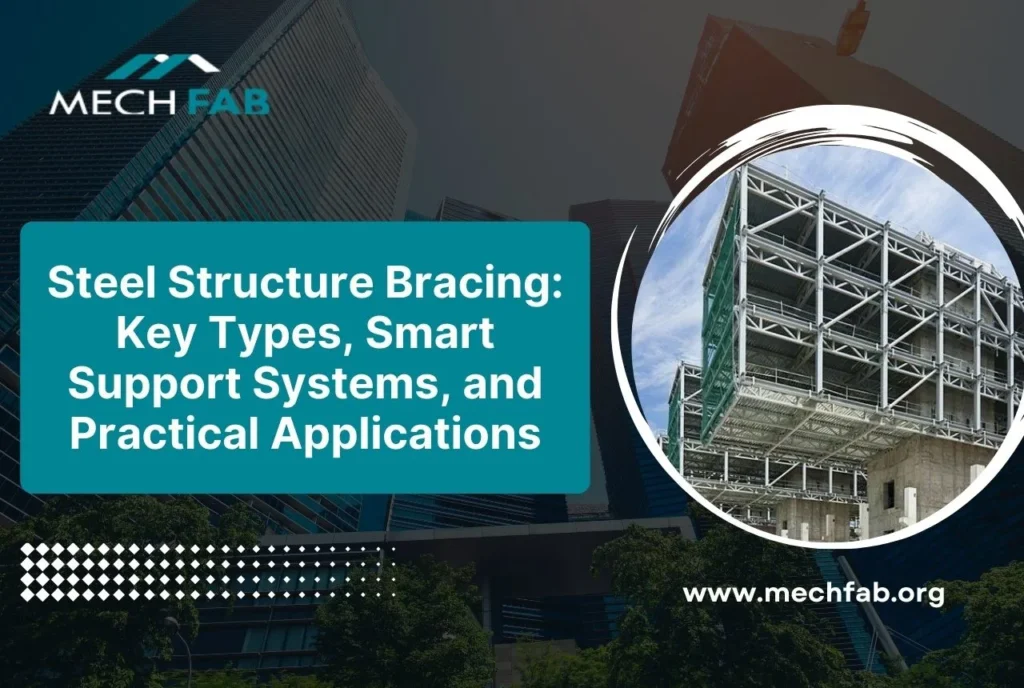
Learn what is bracing and its importance in steel structure bracing. Explore different types of bracing for steel structures, including portal bracing, and understand how effective bracing support ensures stability, strength, and durability for industrial, commercial, and structural projects.
Construction projects today demand precision, efficiency, and cost-effectiveness without compromising durability. Pre engineered building structures (PEBs) have emerged as a game-changing solution that fulfills these requirements. By combining advanced pre building engineering with modular design, PEBs provide businesses and industries with structures that are not only robust but also quick to assemble and customizable to specific needs.
This blog delves into the types of pre engineered buildings, their structural advantages, and how pre engineered building design techniques make them suitable for a wide range of industrial, commercial, agricultural, and recreational applications.
Understanding Pre Engineered Buildings
A pre engineered building structure is a steel-framed building where all primary components are fabricated in a factory according to precise engineering specifications. Once fabricated, these components are shipped to the construction site for assembly. Unlike conventional construction, PEBs minimize on-site labor, reduce material wastage, and significantly shorten project timelines.
Pre building engineering involves careful structural analysis, material optimization, and design planning. Each component is designed for maximum efficiency, ensuring that the final pre engineered building design is both structurally sound and tailored to the client’s functional requirements.
Advantages of Pre Engineered Buildings
The adoption of PEBs has skyrocketed because of their distinct benefits:
- Reduced Construction Time – Off-site fabrication allows for parallel site preparation, resulting in faster project completion.
- Cost-Effectiveness – Less material wastage, lower labor costs, and quicker completion reduce overall project expenses.
- Durability and Strength – Steel frameworks withstand extreme weather conditions, heavy loads, and seismic activity.
- Flexibility for Expansion – Modular designs allow buildings to be easily extended in the future.
- Energy Efficiency – Insulated panels and efficient roofing systems reduce operational energy costs.
- Design Versatility – Pre engineered building designs can be customized for industrial, commercial, or specialized applications.
Types of Pre Engineered Buildings
PEBs are highly adaptable and can be customized for a wide variety of industries. Below is an in-depth look at the main types of pre engineered buildings:
1. Industrial Pre Engineered Buildings
Industrial PEBs are ideal for factories, warehouses, and production facilities. They offer:
- Large open floor plans for machinery and assembly lines
- High ceilings for cranes and material handling
- Steel frameworks capable of supporting heavy loads
Industries such as automotive, electronics, and FMCG rely heavily on these types of PEB structures for their durability, scalability, and cost efficiency.
2. Commercial Pre Engineered Buildings
Commercial PEBs include office complexes, shopping malls, retail outlets, and showrooms. Their pre engineered building design focuses on combining utility with aesthetic appeal. Features include:
- Expansive interiors without obstructive columns
- Modern facades with glass and steel combinations
- Quick assembly and modular expansion
Businesses benefit from these structures because they are both visually appealing and functional.
3. Institutional Pre Engineered Buildings
Schools, hospitals, and government institutions are increasingly using PEBs. Advantages include:
- Compliance with safety and regulatory standards
- Well-lit, ventilated spaces suitable for large occupancy
- Flexibility for future expansion
Through meticulous pre building engineering, these buildings are optimized for safety, efficiency, and long-term durability.
4. Agricultural Pre Engineered Buildings
Agriculture-related PEBs are used for barns, poultry houses, greenhouses, grain storage, and cold storage units. Features include:
- Resistance to environmental stress like heavy wind and rain
- Controlled ventilation and temperature for crops and livestock
- Scalable layouts to maximize storage and operational efficiency
These pre engineered building structures enhance productivity while protecting valuable agricultural assets.
5. Sports and Recreational Pre Engineered Buildings
PEBs are increasingly used for indoor stadiums, sports complexes, and recreational centers. Benefits include:
- Large, column-free interiors for uninterrupted space
- Lightweight steel structures providing strength without bulk
- Customizable layouts for different sports and recreational activities
Pre building engineering ensures structural integrity and safety while offering design flexibility for recreational and sports facilities.
6. Cold Storage and Warehousing Pre Engineered Buildings
Warehouses and cold storage facilities often use PEBs to maintain temperature-sensitive goods. Key features include:
- Insulated walls and roofing to ensure energy efficiency
- Easy installation of racks, loading docks, and refrigeration units
- Durable, scalable, and cost-effective structures
Industries like pharmaceuticals, FMCG, and food processing rely on these types of PEB structures for operational efficiency and long-term sustainability.
Components of a Pre Engineered Building Structure
The efficiency and durability of a PEB depend on its components, which are carefully planned during pre building engineering:
- Primary Frames: Steel members that form the main load-bearing structure
- Secondary Frames: Purlins and girts that support walls and roof panels
- Roofing and Wall Panels: Steel or insulated panels providing thermal efficiency
- Fasteners and Connections: Precision-engineered joints for quick assembly
- Doors, Windows, and Skylights: Customized for functional and aesthetic needs
Each component is designed to integrate seamlessly, creating a robust pre engineered building structure that is easy to assemble and long-lasting.
Emerging Trends in Pre Engineered Buildings
The future of pre engineered building design focuses on innovation, sustainability, and adaptability:
- Green Construction: Use of eco-friendly materials and energy-efficient systems
- Automation and Smart Integration: Intelligent lighting, HVAC, and security solutions
- Rapid Modular Construction: Faster on-site assembly through advanced prefabrication
- Highly Customizable Designs: Buildings tailored for industry-specific operational requirements
These advancements ensure that types of pre engineered buildings remain the top choice for industries seeking modern, sustainable, and cost-efficient construction solutions.
Final Thoughts
From industrial factories to commercial spaces, agricultural facilities, and recreational centers, pre engineered building structures are reshaping the construction industry. Their modularity, durability, and adaptability make them ideal for diverse applications.
By leveraging advanced pre building engineering and innovative pre engineered building designs, businesses can achieve faster construction, operational efficiency, and long-term reliability. Understanding the types of pre engineered buildings and their advantages enables companies to make informed decisions and invest in structures that meet both current and future needs.