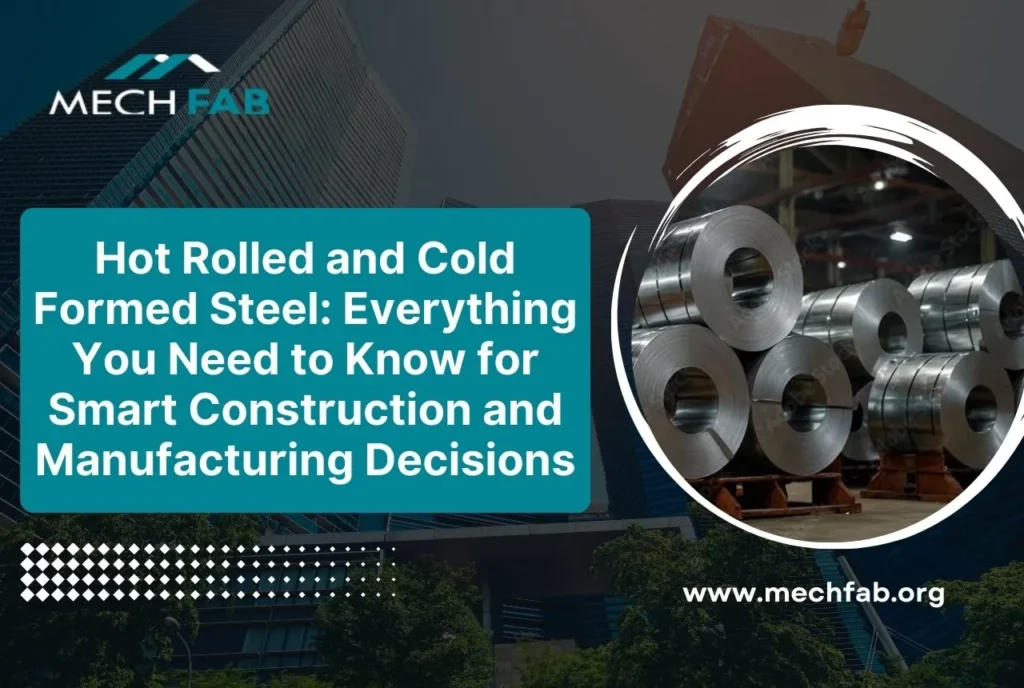
Struggling to choose between hot rolled and cold formed steel? Explore their differences, benefits, applications, and sustainability factors in this detailed guide. Discover which steel type suits your project needs for maximum efficiency and durability.
Steel is one of the most widely used materials in the world, underpinning industries ranging from construction and manufacturing to transportation and energy. Its remarkable strength, durability, and versatility make it indispensable in creating infrastructure, machinery, and consumer products. Yet, within the steel industry, different manufacturing processes produce steel with unique characteristics tailored to specific applications. Two of the most common forms are hot rolled and cold formed steel.
Understanding the difference between hot rolled and cold formed steel is essential for professionals in construction, engineering, manufacturing, and design. Choosing the right steel type can impact structural integrity, cost-efficiency, and sustainability of projects.
This comprehensive guide dives deep into the processes, properties, applications, benefits, and key distinctions of hot rolling steel versus cold formed steel, helping you make an informed decision for your next project.
What Is Hot Rolling Steel?
Hot rolling steel refers to the process of shaping steel by heating it above its recrystallization temperature (generally over 1700°F or 926°C) and passing it through rollers to form plates, sheets, beams, and other structural elements. Because of the elevated temperature, the steel becomes malleable and easier to shape into large-scale structural components.
Key Features of Hot Rolling Steel
- Versatile Shapes and Sizes: Hot rolling steel is ideal for producing large sections, structural beams, rails, and industrial frames in a wide range of dimensions and thicknesses.
- Cost-Effective Production: The ability to shape steel at high temperatures allows manufacturers to produce large quantities of material rapidly and cost-effectively.
- Surface Finish: Hot rolled steel tends to have a rougher surface finish due to scale formation during the process, which is often acceptable in structural applications.
- Ductility and Weldability: Due to the high temperature processing, hot rolled steel remains ductile, making it easier to weld, cut, and further shape without cracking.
Hot rolling steel is widely used in industries where structural strength is critical, and precise surface finishes are not a top priority. Typical applications include bridges, heavy construction frameworks, shipbuilding, and industrial equipment.

What Is Cold Formed Steel?
In contrast, cold formed steel is manufactured by shaping steel at or near room temperature. This process involves mechanically pressing, bending, or rolling steel sheets into specific profiles, such as metal studs, roofing sheets, or electrical cabinets. The absence of high temperatures allows for precise control over dimensions and surface finish.
Key Features of Cold Formed Steel
- High Strength-to-Weight Ratio: Work hardening during cold forming increases the yield strength of steel, making components stronger for their thickness.
- Dimensional Precision: Cold formed steel products have tight tolerances, which are crucial for applications requiring accuracy.
- Smooth Surface Finish: Ideal for visible applications or where surface treatment is critical.
- Lightweight: Enables the production of components that are easier to handle, reducing overall structural weight and construction time.
Cold formed steel is especially popular in residential and commercial building construction, where metal framing, roofing, and light structural elements are required. It is also used in HVAC ductwork, furniture, and electrical cabinets.

The Key Differences Between Hot Rolled and Cold Formed Steel
To fully grasp the difference between hot rolled and cold formed steel, it’s important to compare them across various critical aspects.
1. Manufacturing Process
- Hot Rolled Steel: Involves heating the steel above its recrystallization temperature and passing it through rollers, allowing large reductions in thickness with ease.
- Cold Formed Steel: Steel is shaped at room temperature using high-pressure rollers or mechanical presses, which enhances strength through work hardening but limits the range of shapes and thicknesses.
2. Surface Finish and Dimensional Tolerance
- Hot rolled steel typically has a rough surface finish and looser tolerances due to the scale formation and thermal expansion during the high-temperature process.
- Cold formed steel offers a smoother surface and tighter dimensional tolerances, suitable for applications where appearance and precision are important.
3. Structural Strength
Cold formed steel exhibits higher yield strength than hot rolled steel because the deformation process leads to work hardening. However, hot rolled steel offers better ductility, making it easier to weld and manipulate in large-scale applications.
4. Typical Applications
| Hot Rolled Steel | Cold Formed Steel |
| Structural beams, columns, rails | Metal framing for buildings |
| Industrial equipment frameworks | HVAC ductwork and piping |
| Shipbuilding | Electrical cabinets |
| Heavy machinery supports | Residential and commercial roofing |
5. Cost Implications
- Hot Rolling Steel: Generally more cost-effective for large-scale structural applications, especially when surface finish and dimensional precision are not critical.
- Cold Formed Steel: While potentially more expensive per unit, it offers greater cost-efficiency for projects requiring precise dimensions and lightweight structures.
Advantages and Disadvantages
Hot Rolled Steel
Advantages:
- Cost-effective for large structural components.
- Easier to weld and fabricate.
- Suitable for heavy-duty applications.
Disadvantages:
- Rough surface finish.
- Less precise dimensions.
- Higher energy consumption in manufacturing.
Cold Formed Steel
Advantages:
- Precise dimensions and smooth finish.
- High strength-to-weight ratio.
- Sustainable manufacturing due to lower energy use.
Disadvantages:
- Limited to thinner gauges.
- Less suitable for large structural frameworks.
Environmental Impact and Sustainability
The sustainability aspect of steel manufacturing is increasingly important in today’s eco-conscious world.
- Hot Rolling Steel: Requires significant energy to heat steel to high temperatures, resulting in a higher carbon footprint. Modern energy-efficient technologies and recycling practices are helping reduce its environmental impact.
- Cold Formed Steel: As the process occurs at room temperature, it uses considerably less energy, making it a more environmentally friendly option. Cold formed steel products are often manufactured using recycled steel, further supporting sustainable construction practices.
Choosing cold formed steel can align with green building certifications like LEED, as its lower energy footprint and recyclability contribute to sustainable construction goals.
Market Trends and Innovations
As construction and manufacturing technologies evolve, both hot rolling steel and cold formed steel are seeing advancements that enhance their applications.
- In the hot rolling steel market, automation and advanced heating technologies are improving production speed and energy efficiency. There’s also a push for higher-strength hot rolled steel to meet modern structural demands.
- The cold formed steel industry has seen innovation in coating technologies that improve corrosion resistance and extend the lifespan of components. Additionally, advanced manufacturing techniques allow for more complex profiles and better dimensional consistency, expanding the use of cold formed steel in architectural and structural applications.
The growing emphasis on lightweight construction materials in sectors such as residential buildings, commercial structures, and modular construction drives the increased adoption of cold formed steel.
Real-World Applications: Choosing the Right Steel
To illustrate the difference between hot rolled and cold formed steel in real-world scenarios, consider these examples:
- Construction of Commercial Buildings:
- Use cold formed steel for metal studs, roof panels, and precise framing where accuracy and lightweight structures are critical.
- Use hot rolled steel for beams and columns that require significant structural strength and ductility.
- Use cold formed steel for metal studs, roof panels, and precise framing where accuracy and lightweight structures are critical.
- Infrastructure Projects (Bridges, Railways):
- Hot rolled steel is preferred for structural elements like bridge girders and railway tracks due to its cost-effectiveness in large-scale production and its ability to withstand heavy loads.
- Hot rolled steel is preferred for structural elements like bridge girders and railway tracks due to its cost-effectiveness in large-scale production and its ability to withstand heavy loads.
- Industrial Machinery and Equipment:
- Hot rolled steel is widely used for machinery frames and heavy equipment structures where thickness and strength are more important than precision finishes.
- Hot rolled steel is widely used for machinery frames and heavy equipment structures where thickness and strength are more important than precision finishes.
- Residential Construction:
- Cold formed steel is favored for interior framing, wall studs, and roofing systems, where precise dimensions and aesthetic appeal are essential.
Conclusion: Making an Informed Choice
Understanding the difference between hot rolled and cold formed steel is key to selecting the most appropriate material for your project. Whether prioritizing structural strength, precision, surface finish, or sustainability, each type of steel offers unique benefits.
- Choose hot rolling steel for large structural applications where cost-effectiveness and ease of welding are critical.
- Opt for cold formed steel when precision, surface smoothness, and environmental considerations are paramount.
By making the right choice, you not only ensure your project’s structural integrity and longevity but also contribute to energy-efficient and sustainable practices in the industry. Consulting with experienced suppliers and industry professionals will help tailor the steel choice to your specific needs, ensuring optimal performance and long-term value.